
How to Evaluate a Roll of Dimes: Tips for Spotting Profitable Issues
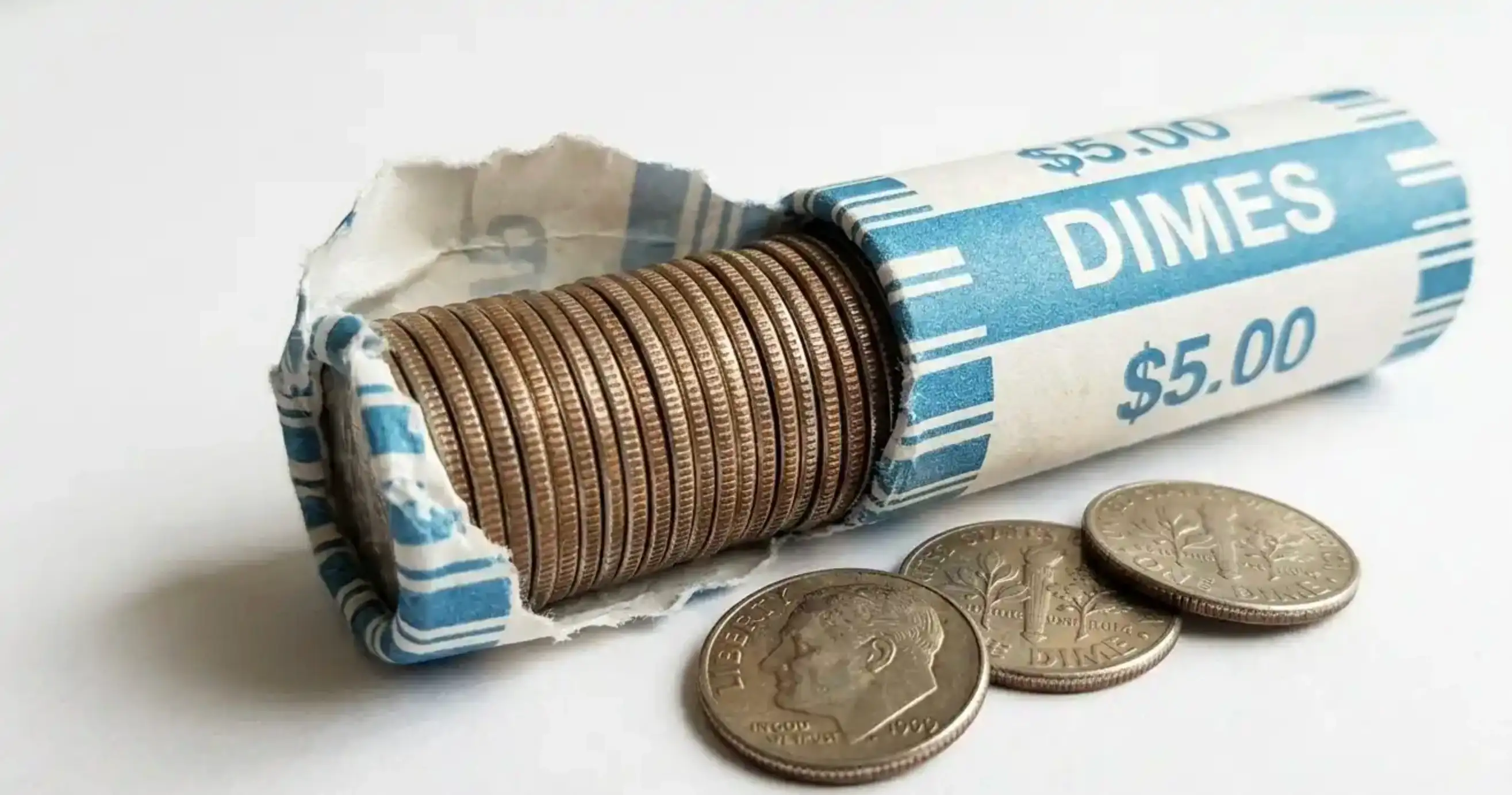
The start price of a roll is 5$ and you should clearly evaluate the quality of your issues. A roll of dimes contains more than 45 pieces.
Separating Silver from Base Metal
Experienced collectors do not examine every coin face immediately. Speed matters when you process multiple boxes of dimes.
You must sort the bulk of the roll through a rapid physical inspection before you spend time on individual dates. The transition from precious metal to base metal composition in the mid-twentieth century provides the easiest way to isolate valuable pieces.
The Edge Check Method for Immediate Identification
Unwrap the paper roll and line up the fifty dimes face-to-face to form a solid cylinder. Look directly at the long edge profile.
Modern clad dimes contain a core of pure copper bonded to outer layers of a copper-nickel alloy. This composition creates a distinct, bright copper stripe down the center of the coin’s edge.
In contrast, dimes from 1964 and earlier contain ninety percent silver. These older coins lack the copper core entirely.
A silver dime edge looks:
Solid white
Gray
Silver
If you spot a white edge amidst a sea of copper stripes, pluck that coin out immediately. This visual test takes less than three seconds per roll and instantly highlights your silver finds.
How many dimes in a roll? Usually, in a roll you will see 50 pieces.
Junk Silver vs. Important Dates
Once you separate the silver pieces, divide them into two financial categories: melt value and numismatic premium.
Melt Value, Junk Silver – this term applies to common-date silver dimes with heavy wear. They carry no special historical rarity. Instead, their worth fluctuates daily based entirely on the spot price of silver bullion.
Numismatic Premium – this value applies to coins that collectors desire due to low production numbers, specific mint marks, or exceptional condition. A major date coin in high grade commands a price far above its raw metal content.
The table below outlines the core differences between these two categories:
Feature | Junk Silver | Numismatic Premium Dimes |
Primary Value Driver | Current silver market spot price | Historical rarity and collector demand |
Typical Target Dates | Common years, for example, 1964 | Low-mintage years (1916 D) |
Impact of Physical Wear | Minimum impact on base bullion price | Severe impact; wear drops premium |
Common Disposition | Sold in bulk bags to bullion dealers | Sold individually to collectors or auctions |
Evaluating Roosevelt Dimes
Period – 1946–Present
The Roosevelt dime series began in 1946; the main figure is President Franklin D. Roosevelt. You will find these coins in nearly every roll you open, because the U.S. Mint still produces this design today.
The Ultimate Prize: Pre-1965 90% Silver Issues
From 1946 through 1964, the U.S. Mint struck billions of Roosevelt dimes with a silver composition. They weigh more than modern dimes and produce a distinct high-pitched ring when they tap a hard surface.
The physical specifications of these two eras contrast sharply:
Characteristics | Silver Roosevelt | Clad Roosevelt |
Production Years | 1946–1964 | 1965–Present |
Total Weight | 2.50 grams | 2.27 grams |
Composition | 90 % Silver, 10 % Copper | 75 % Copper, 25 % Nickel |
Modern Clad Varieties & the Famous No S Proof Errors
Do not assume that all post-1964 clad dimes carry only face value. The San Francisco Mint creates special proof coins for collectors.
These coins feature mirror-like fields and frosted details, and they always bear an S mint mark. However, in specific years, workers accidentally omitted the mint mark from the coin dies. These error coins slipped into circulation or special sets.
Watch for these four elite No S proof errors during your search:
1968 No S Roosevelt Dime – the first year of proof production at San Francisco produced this classic error.
1970 No S Roosevelt Dime – another early clad proof mix-up that commands thousands of dollars at auction.
1975 No S Roosevelt Dime – this coin represents one of the rarest modern U.S. coins, with only two known examples in existence.
1983 No S Roosevelt Dime – a later proof error that remains a prime target for roll hunters.
Major Roosevelt Die Varieties and Minting Errors
Beyond composition changes and proof errors, look for production mistakes from standard business strikes. Use a list to check your clad dimes for these anomalies:
1996 W Issue
The U.S. Mint of the item is at West Point. The Mint has only official uncirculated sets, but people occasionally break these sets open and spend the coins. Look for the W mint mark.
Doubled Die Obverses
Look closely at the text "IN GOD WE TRUST" and the date. Double lines on the letters indicate a valuable variety. Notable years include 1960/1963/1964.
Off-Center Strikes
When the coin press machinery misaligns, the die strikes the blank off-center. Look for pieces that miss ten percent or more of the design.
Clipped Planchets
The machine blanks out metal discs from a metal sheet. If the feed mechanism slips, the cutter bites into an existing hole, which creates a dime with a crescent-shaped bite missing from the edge.
How to Avoid Destroying Mint State Surfaces
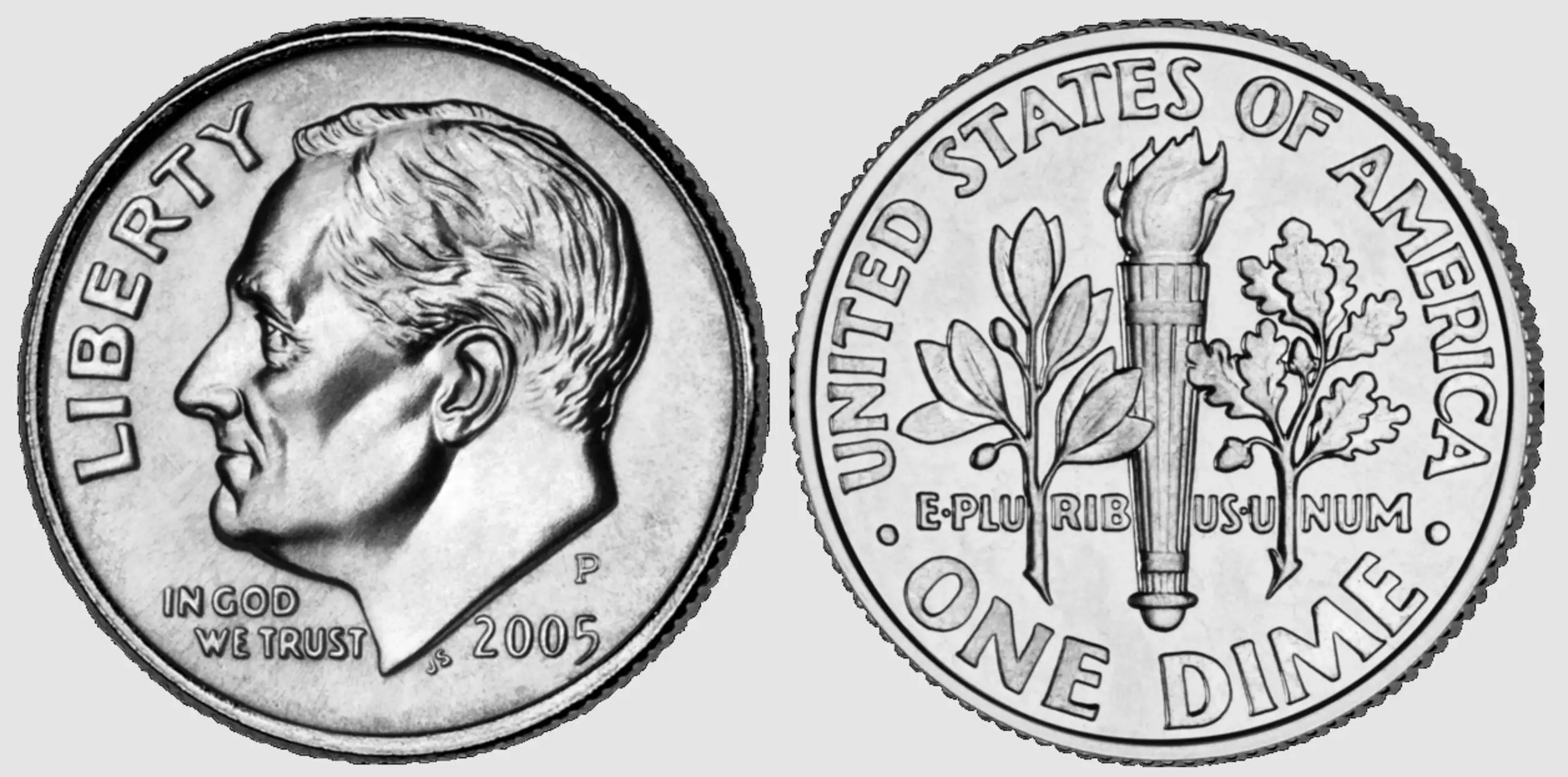
When you find a clean, shiny coin, your handling methods determine its future value. A single scratch can drop an uncirculated coin down several grade levels.
Follow these strict rules to protect your inventory:
Step 1 – Never Clean Your Item
Do not wipe a dime with a cloth or use metal polish. Cleaning scratches completely ruins the numismatic value.
Step 2 – Wear Cotton Gloves
Skin oil contains acids that tarnish copper and silver over time. Wear clean, powder-free cotton or nitrile gloves when you handle high-grade items.
Step 3 – Hold Coins by the Edges
Never place your fingers directly onto the flat face or the central design of the coin.
Step 4 – Work Over a Soft Surface
Place a felt pad or a clean microfiber towel across your desk. If a rare coin slips from your fingers, it will land safely on a soft cushion rather than a hard tabletop.